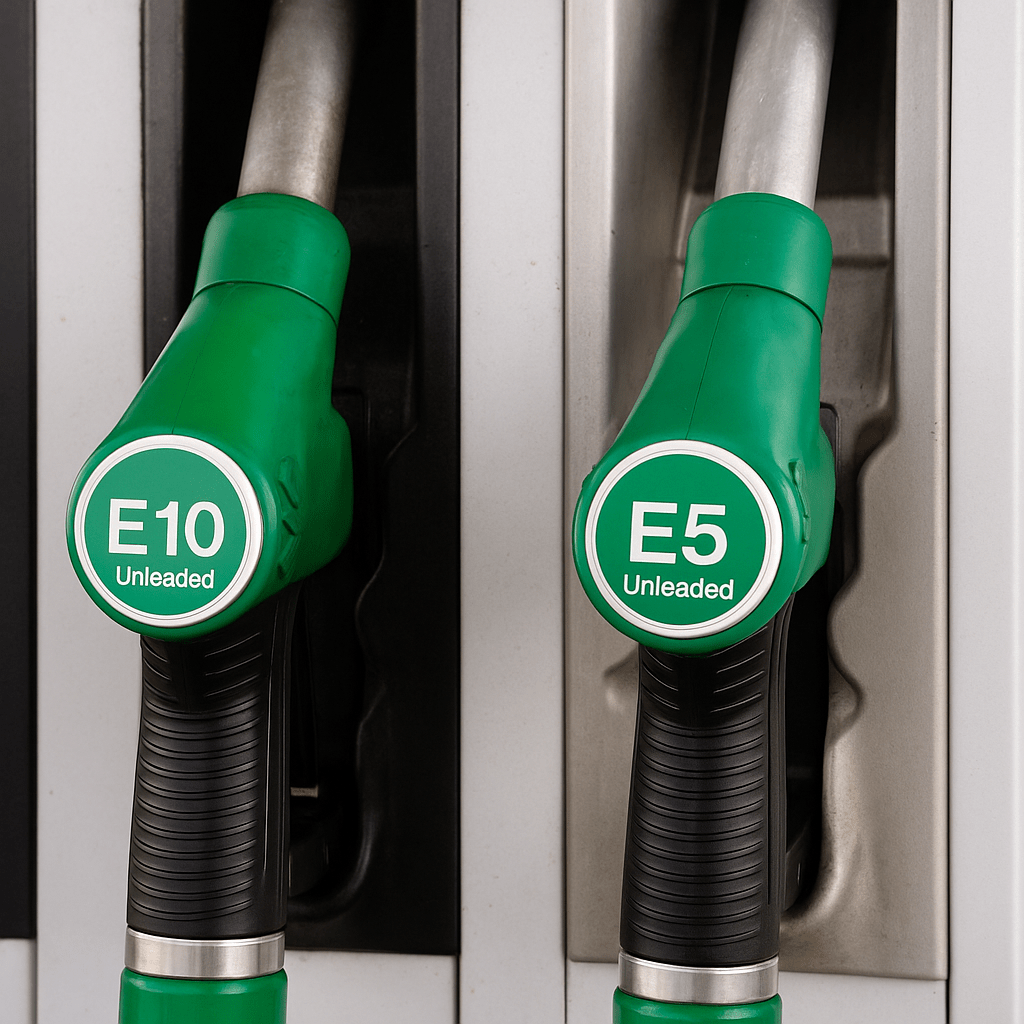
If you’ve filled up your car recently, you’ve probably seen the labels E10 and E5 at the pump. E10 is now the standard petrol in the UK. It’s cheaper and better for the environment because it contains more ethanol—a type of alcohol made from plants. But just because it’s greener doesn’t always mean it’s better for your car.
Let’s break it down.
E10 petrol has up to 10 percent ethanol. Ethanol absorbs water from the air, which can cause problems inside your car over time. If your car sits for long periods without being driven, that moisture can lead to rust or damage in parts like the fuel tank, pipes or injectors. It can also make rubber and plastic parts wear out faster.
This is especially true for older cars or cars that aren’t used very often. If your car was made before 2011, it may not have been designed to handle this kind of fuel. Using E10 too often could eventually lead to expensive repairs.
Even if your car is newer, E10 isn’t as efficient as E5. Because ethanol doesn’t produce as much energy, you might notice your fuel doesn’t go quite as far. Studies show E10 can reduce your fuel economy by 1 to 3 percent. That may not sound like much, but over time it can cost you more money at the pump.
Premium E5 petrol, on the other hand, usually contains only 5 percent ethanol and often comes with a higher “octane rating.” This helps the engine run more smoothly, prevents damage from something called “knocking,” and can help the car stay cleaner inside. That’s why performance cars and engines with a lot of miles often run better on E5.
It’s not just about speed. Using E5 can help protect your engine, improve reliability, and keep your car running well for longer—especially if it’s older or high mileage.
If you’ve already filled up with E10, don’t worry. Just try to top up with E5 before your tank gets too low. Mixing the two is safe and can help reduce the negative effects of too much ethanol.
In Short:
E10 is fine for most modern cars, but it’s not ideal for older engines or cars that don’t get used often.
E5 gives better protection, smoother performance and may even save money in the long run. Choosing E5 more often could mean fewer repairs and better driving over time.
So next time you’re at the pump, it might be worth spending a little extra to fill up with E5. It’s not just about fuel—it’s about looking after your car.

Leave a comment