For decades, the hot hatch has been a symbol of accessible fun: punchy performance, agile handling, and just enough practicality to justify it to your partner. Cars like the Mk5 Golf GTI, Peugeot 205 GTi and Focus ST have long defined this category. But now we are standing on the edge of a new chapter: the electrified hot hatch.
Leading this charge is the upcoming Peugeot E208 GTi. Due in 2025, it is an all-electric take that channels the spirit of the original 205 GTi with 276 bhp, a 0 to 60 time of 5.6 seconds, and precision-focused chassis tuning. Peugeot promises the adaptive suspension and low centre of gravity will provide a driving purity that enthusiasts feared might disappear with combustion.
But here is the real question: can an EV genuinely capture the essence of the hot hatch? And will we be willing to live with the limitations that come with electric power in exchange for new thrills?
What we are gaining in this transition is a different kind of performance. Cars like the Hyundai Ioniq 5 N have already demonstrated that electric vehicles can deliver raw excitement. With 641 bhp, a simulated gearshift and even artificial engine noise, it is surprisingly engaging. However, it is more of a high-performance EV than a classic hot hatch, both in size and character.
The E208 GTi promises something closer to the traditional formula. Smaller than a Golf and lighter than most electric cars, it is aimed at delivering agility rather than brute force. Instant torque, direct front-wheel-drive response, and a compact footprint all point to a car designed for driver enjoyment rather than outright dominance.
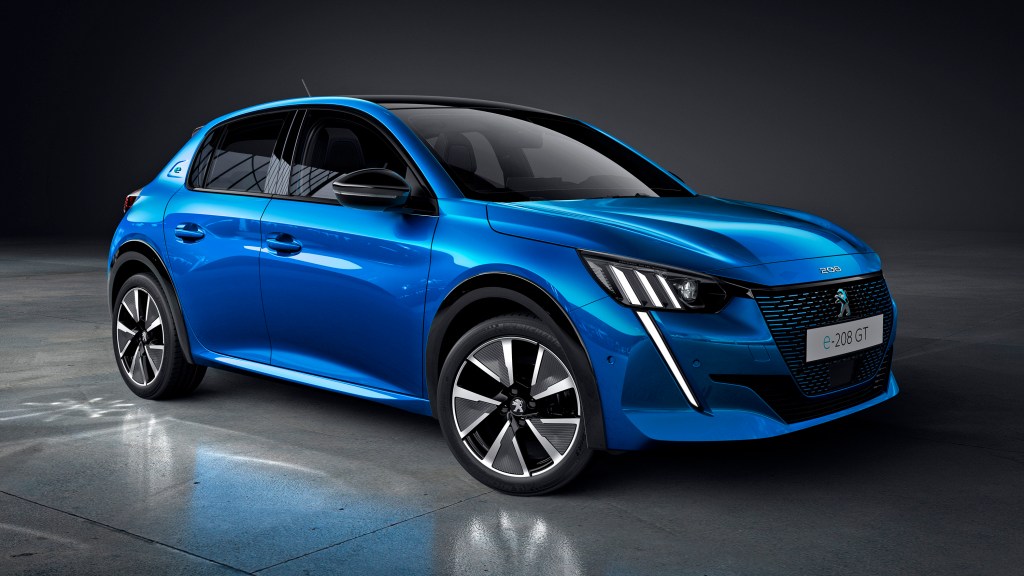
There are, however, inevitable compromises. The projected range of around 250 miles is respectable, but drive it with enthusiasm and you can expect considerably less. For most people doing short commutes or weekend blasts on back roads, that is manageable. But for those living rurally or regularly covering long distances, range anxiety remains a real consideration.
Then there is the emotional aspect. A hot hatch has always been more than numbers on a spec sheet. The fizz of a high-revving petrol engine, the mechanical connection through a manual gearbox, and even the imperfections that give character — these are experiences that simulated gear shifts and synthetic engine notes struggle to replicate. The charm of a Peugeot 306 Rallye on full throttle is not easy to digitise.
That said, the landscape is changing quickly, and the E208 GTi will not be alone for long. Other electric hot hatches are in the pipeline. The Abarth 500e offers characterful, if limited, thrills. The retro-styled Renault 5 E-Tech, due in 2025, is shaping up to be a charismatic contender. The latest Mini Cooper SE brings agile handling and strong acceleration in a compact package. Volkswagen’s ID2 GTI, expected in 2026, is perhaps the most direct challenger, promising to deliver on the GTI name’s legacy while adapting to the electric era.
Yet on the petrol-powered side, models like the Toyota GR Yaris, Hyundai i20 N and, until recently, the Ford Fiesta ST, remind us what we are potentially giving up. There is something unmistakably alive about a small petrol car with a manual gearbox and a playful chassis.
We are not quite at a crossroads, but we are approaching one. Electric hot hatches are arriving, and by most accounts, they are shaping up to be more exciting than many expected. But can they truly replace the experience of a great petrol hatchback?
For now, there is still time to enjoy both worlds. Petrol hot hatches are still out there, still engaging, still worth owning. But for those looking ahead, the Peugeot E208 GTi and its electric rivals offer a glimpse of a different kind of fun — one that is quieter, cleaner, and no less involving.
Would you trade your Focus ST or Polo GTI for an electric rival? Is a 250 mile range good enough for real-world use, or do you need the long-legged flexibility of a tank of unleaded? As the market shifts, those choices are becoming more real.
And when the E208 GTi arrives, we will be finding out for ourselves just how much of the old hot hatch magic really makes it through the plug.

Leave a comment